
1. Artificial Intelligence (AI) in Education
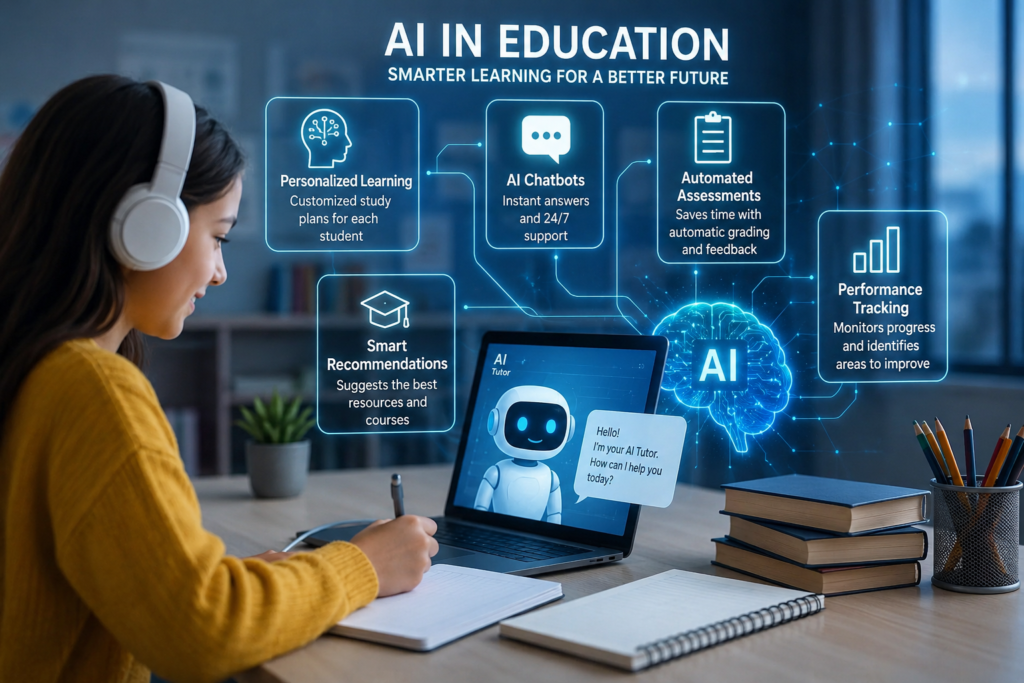
Artificial Intelligence is becoming one of the most powerful tools in modern education. AI helps students learn according to their individual needs and learning pace.
Highlights:
- Personalized learning experiences for every student.
- AI chatbots provide instant answers and guidance.
- Automatic grading and assessment save teachers’ time.
- Smart recommendations for study materials and courses.
- Better tracking of student performance and progress.
AI-powered platforms can identify weak areas of students and provide additional support, making education more effective and efficient.
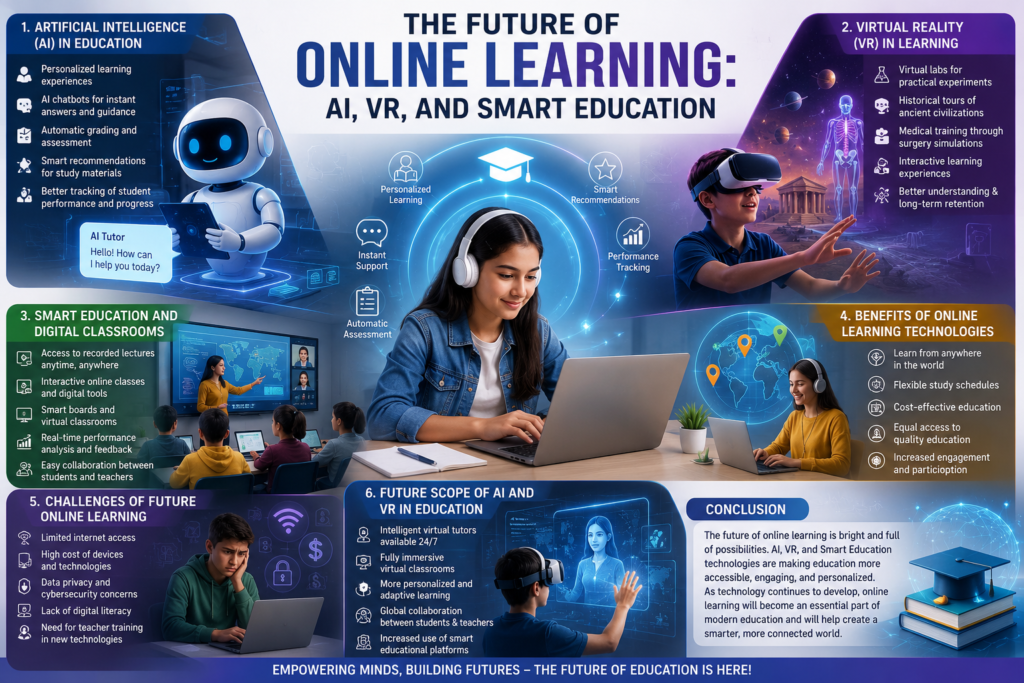
2. The Future of Online Learning: AI, VR, and Smart Education”
1. Artificial Intelligence (AI) in Education
Artificial Intelligence is becoming one of the most powerful tools in modern education. AI helps students learn according to their individual needs and learning pace.
Highlights:
- Personalized learning experiences for every student.
- AI chatbots provide instant answers and guidance.
- Automatic grading and assessment save teachers’ time.
- Smart recommendations for study materials and courses.
- Better tracking of student performance and progress.
AI-powered platforms can identify weak areas of students and provide additional support, making education more effective and efficient.
2. The Future of Online Learning: AI, VR, and Smart AI-powered platforms can identify weak areas of students and provide additional support, making education more effective and efficient.
3. Smart Education and Digital Classrooms
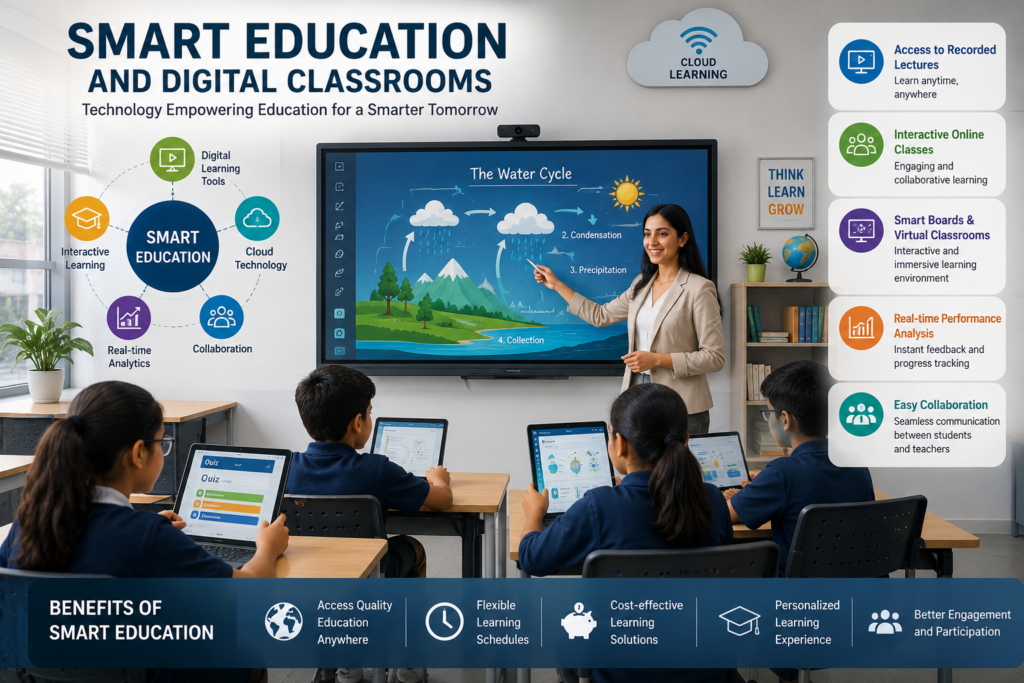
Smart education combines advanced technologies such as AI, cloud computing, and digital learning platforms to create a modern educational environment.
Highlights:
- Access to recorded lectures anytime and anywhere.
- Interactive online classes and digital learning tools.
- Smart boards and virtual classrooms.
- Real-time performance analysis and feedback.
- Easy collaboration between students and teachers.
Smart education provides flexibility and convenience, especially for remote learners and working professionals.
4. Benefits of Online Learning Technologies
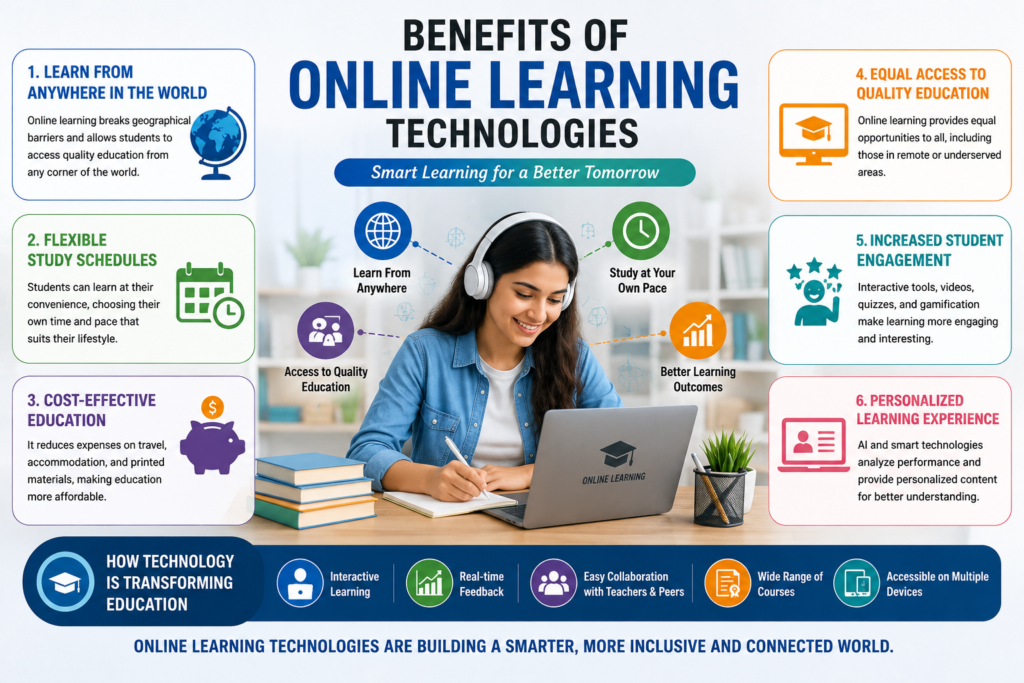
The integration of AI and VR in education offers numerous advantages for students and educational institutions.
Highlights:
- Learning from anywhere in the world.
- Flexible study schedules.
- Cost-effective education compared to traditional methods.
- Equal access to quality education.
- Increased student engagement and participation.
Technology is helping bridge educational gaps and creating opportunities for millions of learners globally.
5. Challenges of Future Online Learning
Despite many advantages, there are some challenges that need attention.
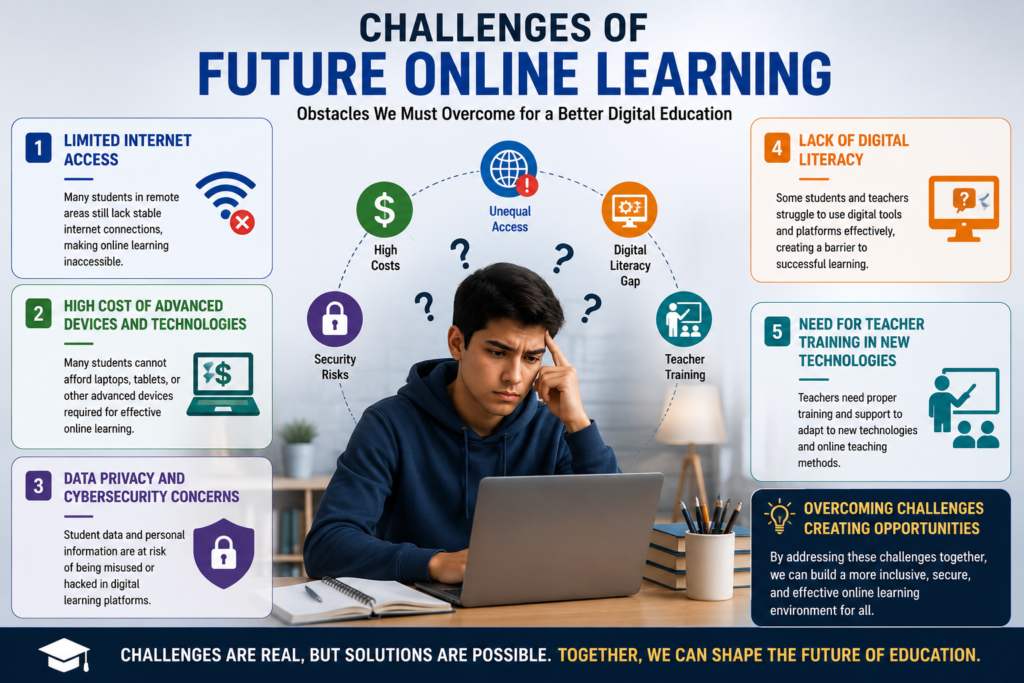
Highlights:
- Limited internet access in some regions.
- High cost of advanced devices and technologies.
- Data privacy and cybersecurity concerns.
- Lack of digital literacy among some users.
- Need for teacher training in new technologies.
Governments and educational institutions must work together to overcome these challenges and ensure inclusive education for everyone.
6. Future Scope of AI and VR in Education
The future of education will become even more advanced with continuous technological innovations.
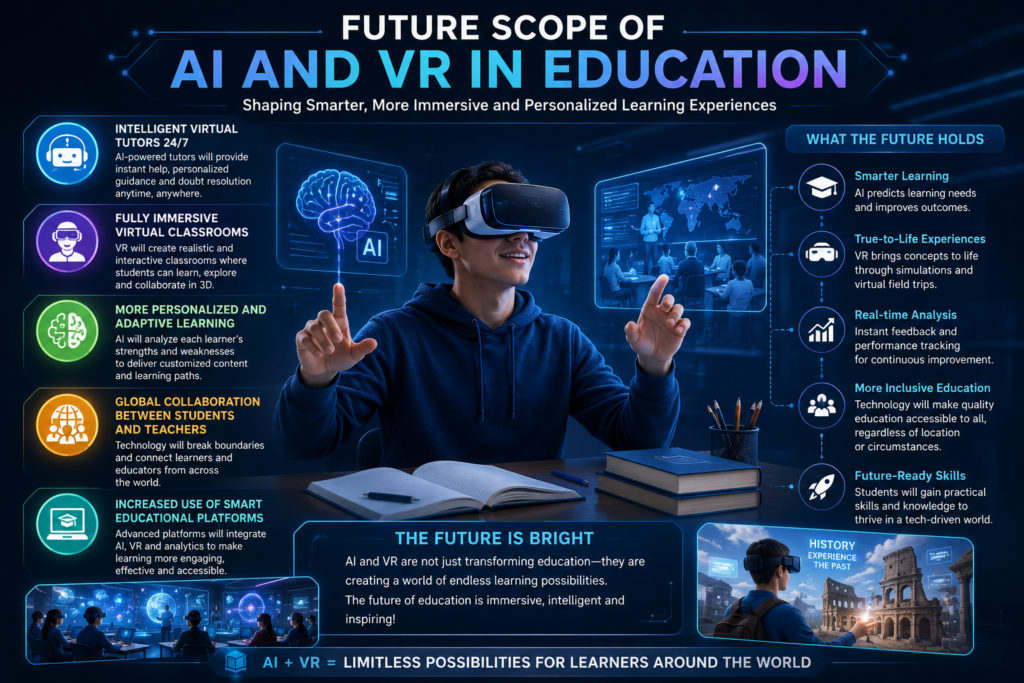
Highlights:
- Intelligent virtual tutors available 24/7.
- Fully immersive virtual classrooms.
- More personalized and adaptive learning systems.
- Global collaboration between students and teachers.
- Increased use of smart educational platforms.
The role of teachers will also evolve, with technology supporting them in delivering more effective learning exper
The future of online learning is bright and full of possibilities. Artificial Intelligence, Virtual Reality, and Smart Education technologies are revolutionizing the educational landscape. These innovations are making education more accessible, engaging, and personalized. As technology continues to develop, online learning will become an essential part of modern education and will help create a smarter, more connected world.
Virtual Reality is changing the way students understand complex concepts. Instead of simply reading from books, students can experience real-life simulations through VR technology.